Case Study: Medical Breakthrough & Medical Saunas


Executive Summary
When I took over the marketing strategy for Medical Breakthrough and Medical Saunas, the brand was deploying a $5M annual ad budget with inefficient returns. Inefficient ad spend, lack of strategic funnel optimization, and broken tracking were causing profitability to decline. To resolve this, we executed a complete rebuild of the revenue architecture, focusing on three core operational problems.
Problem 1: The Attribution Leak
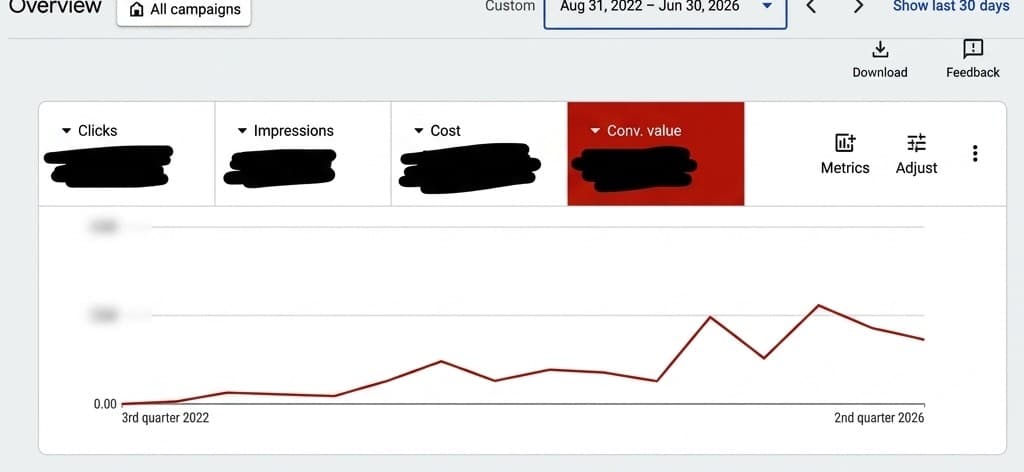
The $5M budget was suffering from massive tracking inefficiencies. Because these are high-ticket items, the sales team was closing massive deals directly over the phone. However, because credit card details were taken offline, the digital platforms were completely blind to the conversions. We were only accurately tracking 20% of our revenue, meaning the algorithms couldn't optimize for our best buyers.
The FixTo avoid introducing digital payment friction into the offline sales process, I digitized the fulfillment step. After the offline charge was completed by the sales team, an automated CRM trigger instantly prompted the customer via SMS/email to "confirm their shipping address." The moment they clicked confirm, conversion tags fired in Google Ads.
20% to 95%
Attributed Revenue IncreaseWe surged our tracked and attributed revenue from 20% to 95% overnight, providing the algorithm with the complete data set required to optimize for high-LTV buyers.
Problem 2: The Quality Score Penalty
Over 50% of the Google Ads budget was bleeding out on keywords with a Quality Score of 5 or below. We were paying massive, unnecessary CPC premiums due to low ad relevance and a legacy Laravel platform that was failing Core Web Vitals.
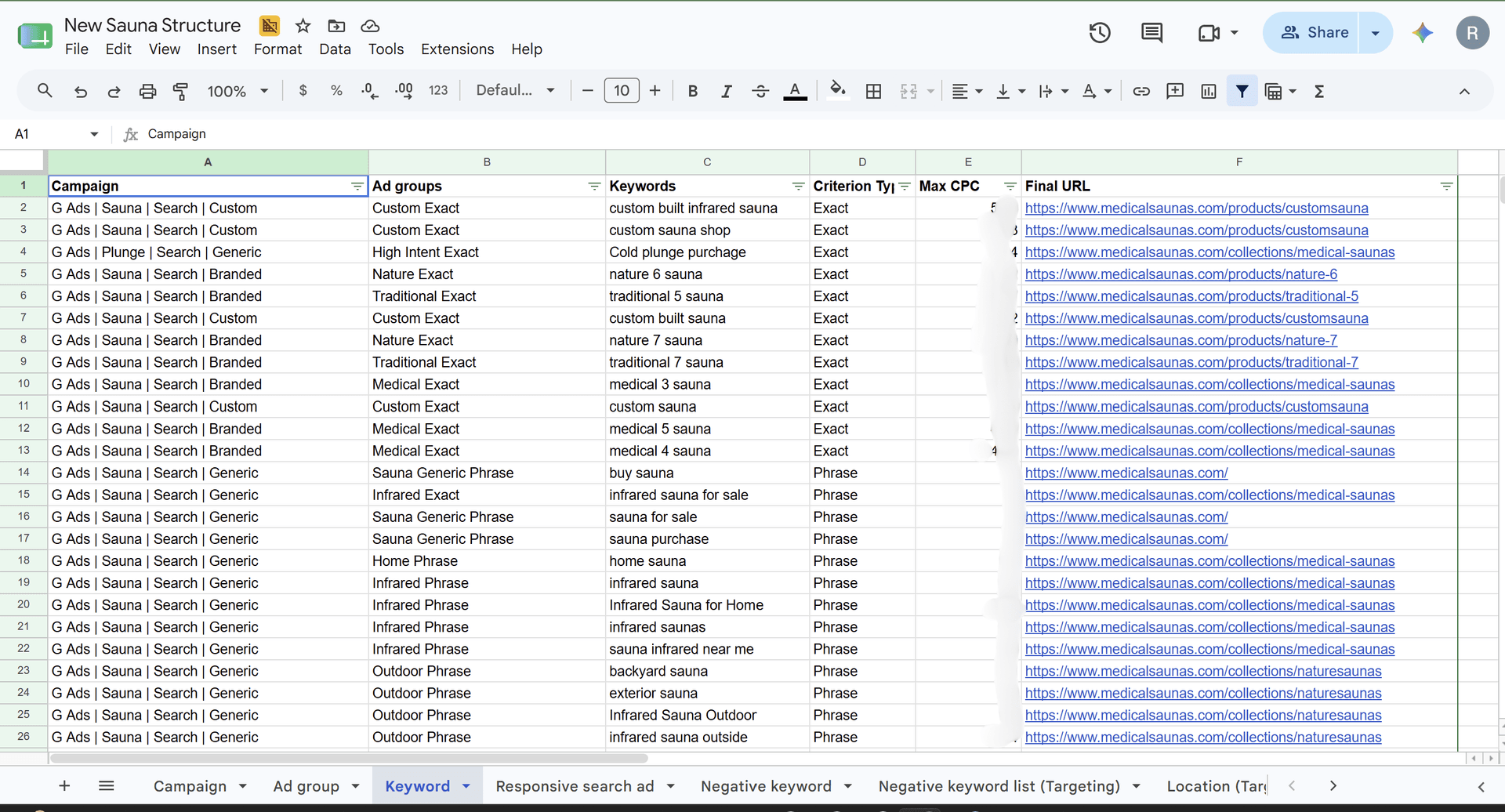
The FixI directed a full re-platforming from the legacy Laravel setup to Shopify. This immediately resolved the page speed issues and allowed the marketing team to deploy and A/B test landing pages rapidly. Simultaneously, I overhauled the entire Google Ads architecture into SKAGs (Single Keyword Ad Groups), mapping hyper-relevant keywords to dedicated, high-converting landing pages.
34% to <23%
Cost of Revenue (CoR) DropThe combination of better decision-making (fueled by the tracked revenue from Problem 1) and drastically improved Quality Scores allowed us to slash low Quality Score spend from 50%+ down to ~20%. This dropped our total Cost of Revenue (CoR) from 35% to under 23%.
Problem 3: The "Shrink to Profitability" Trap
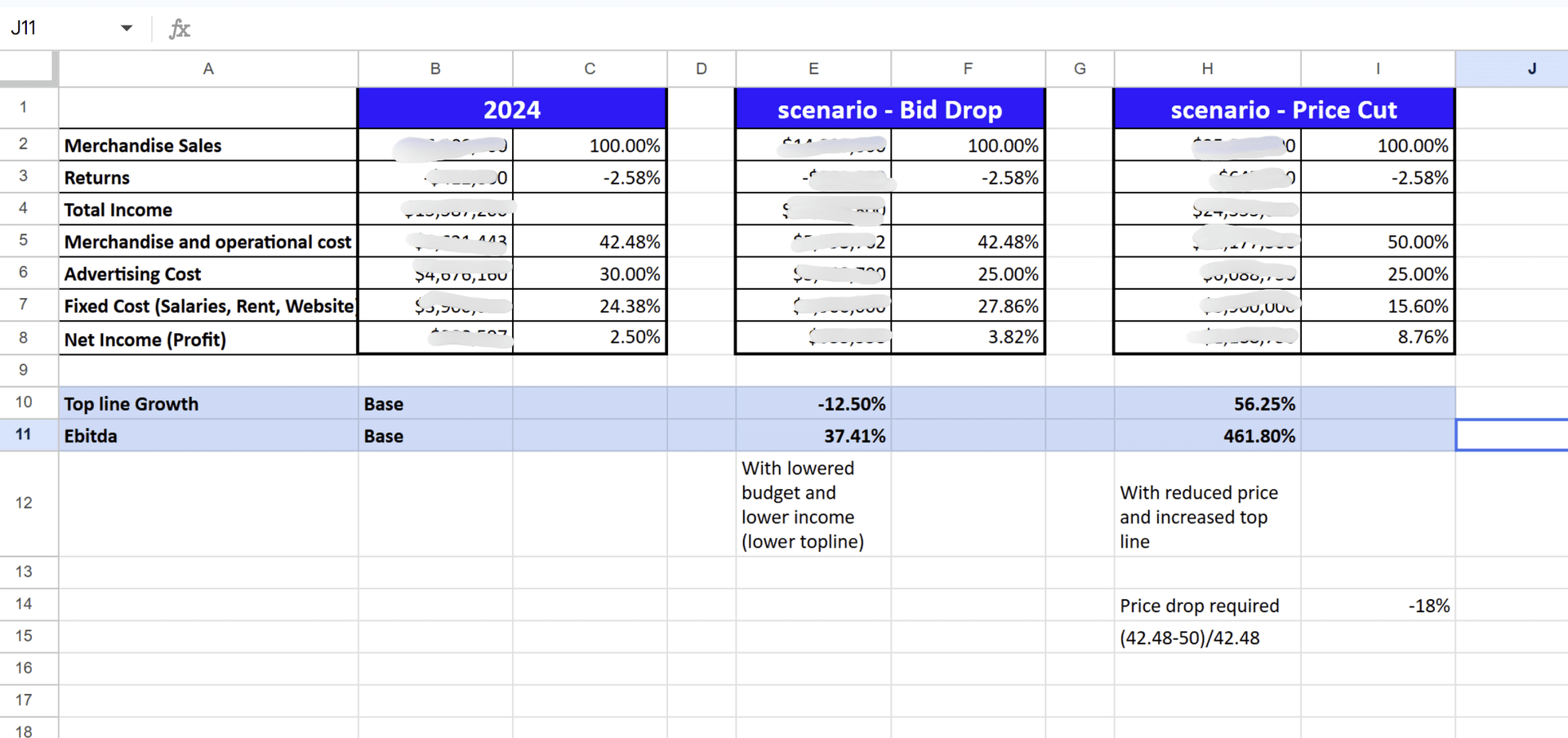
As competition increased over a 3-year period, rising CPCs caused top-line growth to sharply decline. To protect EBITDA, the CEO proposed the classic defensive maneuver: decrease bids, lower the overall ad budget, and accept a smaller top line to squeeze out margin (Scenario 1). This would have shrunk the company's revenue by 12.5% just to achieve a minor profit bump.
The FixI rejected the defensive strategy. Instead, I analyzed the entire 10-year P&L and built a pricing elasticity model. The data revealed that high fixed costs were choking the business at its current revenue baseline. I hypothesized that an 18% strategic price cut would surge conversion rates enough to overwhelm those fixed costs with sheer volume.
The ExecutionThe execution validated the model perfectly (Scenario 2). The 18% price drop drove a massive 56.25% top-line growth, pushing overall revenue to a new high-water mark. Because fixed costs were now leveraged across significantly higher sales volume, they dropped from consuming 24.3% of income down to just 15.6%.
461.8%
Explosion in EBITDAThe final outcome wasn't a minor margin bump; it was a 461.8% explosion in EBITDA, driving a massive multiplier on total Net Profit without requiring a reduction in ad spend.
Ready to Scale?
Stop burning cash on generic marketing. Let's architect your growth engine today.